June 21, 2013

Birth Is Instinctive


By Cathy Daub, BWI President

When Roanna Rosewood contacted me and asked me to be part of her birth visionaries platform for the launching of her new book “Cut, Stapled, and Mended,” I immediately accepted. Her book is her story of having had two cesareans followed by a VBAC. It is conversational and enjoyable reading and takes us through the wide range of emotions that women have when making decisions about birth and then living with those decisions. The glimpses she gives us of her personal life are engaging and touch feelings and issues all pregnant women have in birth. Her story is honest and genuine. I highly recommend her book.

All visionaries on her platform were asked to provide a downloadable bonus gift. I offered and carried out a one-hour teleclass on the topic “Birth is Instinctive.”

The underlying message of my talk is that all women are born with the knowledge about how to give birth. Therefore birth is instinctive and what is instinctive doesn’t need to be taught. When people ask, “Then what are you teaching in your childbirth preparation classes?” I respond, “We are helping women to have more trust and faith in their body knowledge that already knows how to give birth.” This is accomplished through the understanding and practice of human values and provides a unique approach to childbirth preparation that is empowering and transforming in nature.

Those on the call had an opportunity to ask questions. Here are a couple I would like to share with you.

First question: I had a beautiful home birth with positive thoughts. I was confident about being able to birth my baby. But then I hemorrhaged after my baby was born. Now I’m pregnant again and have fears because of what happened the first time. What should I do?

Answer: Every birth is unique unto itself. We all know how different children are and even how different one labor is compared to another. Each is a new experience. Therefore we need not compare a previous birth with a new upcoming birth. It is good to say an affirmation (positive thought pattern) to yourself over and over again such as “I am birthing a new baby unique unto herself.”

Second question: I was with a woman who had a previous cesarean and worked hard to have a VBAC. She did all the right things, saying positive affirmations, finding a safe place to give birth, yet she had another cesarean. What can I say to her?

Answer: She needs your comfort, support, and love. She needs to know she did the very best she could and that she cannot ask more of herself than that. Everything in life is a learning experience. It is important that all women continue to love themselves regardless of the birth outcome.

Birth has the potential to be a peak experience in a woman’s life and my wish is for all women to experience the full potential of what it has to offer.

April 23, 2013

Book Review: Optimal Care in Childbirth

-->
by Jane Beal, PhD, CD(DONA), CCE(BWI), CLS

Henci Goer and Amy Romano, Optimal Care in Childbirth: The Case for the Physiological Approach (Seattle: Classic Day Publishing, 2012). 583 pp. $46 Paperback / $39 Kindle.

After a friend had a “pushed” birth followed by an unnecesarean a few years ago, I gave her a copy of Henci Goer’s The Thinking Woman’s Guide to a Better Birth. She had a VBAC the next time around, arriving at the hospital just in time to push out her second baby girl with her body’s own power. She was overjoyed!

Like The Thinking Woman’s Guide, Henci Goer’s new book, Optimal Care in Childbirth, co-authored with Amy Romano, MSN, CNM, presents research that supports evidence-based practices in maternity care. It specifically advocates physiologic birth and expectant management. But unlike The Thinking Woman’s Guide, the intended audience is not expectant parents, but caregivers: doctors, nurses, doulas, childbirth advocates, and midwives. Its purpose is not to help parents make wise decisions in childbirth (indeed, the complexity of the information presented here makes this book inappropriate for most laypeople), but rather to change practices in obstetrics and midwifery.

Optimal Care has been endorsed by Helen Varney Burst, CNM, Ina May Gaskin, CPM, and Penny Simkin, PT. It’s been adopted as part of the reading list for the NARM examination and as a textbook in some certified nurse midwifery training programs. This shows that it is already reaching the next generation of midwives. But it could clearly benefit doctors-in-training as well.

The book presents extensive mini-reviews of several hundred controlled randomized trials conducted between 1990 and 2010. The authors use these mini-reviews to support well-reasoned arguments against the liberal use of cesarean surgery, elective repeat cesarean, elective induction, augmentation of first stage labor, continuous electronic fetal monitoring, the use of IVs, the non per os (“nothing by mouth”) dictum, and epidurals. They further question the need for actively managed second stage labor, instrumental vaginal delivery, fundal pressure, episiotomy, actively managed third stage labor, and the harmful interventions of current, wide-spread newborn practices, including suctioning, immediate cord clamping, and separation of mothers and babies after birth. They make extensive, evidenced-based recommendations for optimal care in childbirth instead.

Goer and Romano make crystal clear that America’s over 30% cesarean epidemic is completely unnecessary, caused by economic factors (cesarean is quicker and more profitable than vaginal birth), legal factors (surveys show that doctors believe they will not be sued, or if sued, they will not lose if they have performed a cesarean, but this assumption has proven false) and social factors (convenience). It is not caused by a sudden inability among American women to give birth vaginally. The authors point out the risks to mother and baby from the first cesarean as well as risks in subsequent pregnancies. (Compare to Goer and Romano, “Vaginal or Cesarean Birth: What is at Stake for Mothers and Babies?”) They do the same with the subject of induction. Clearly, patience is never a greater virtue than when it is practiced by caregivers during childbirth. This point, and many others, are made persuasively.

Just three things gave me pause while reading this book: the recommendation to begin an induction of labor 18 hours after PROM (p. 157); the characterization of “the doula paradox” (p. 427-34); and the lack of strong support for homebirth (p. 501-30).

About PROM and induction: I’ve smelled chorioamnionitis in the labor room before, and as the colloquial saying goes, it ain’t pretty. No one wants a bacterial infection in the laboring mother to put the newborn at risk of sepsis, which usually necessitates a full work-up in NICU and antibiotics for both mother and newborn in hospital. That said, PROM is not the cause of infection. Bacteria is. And it’s the number of cervical exams after PROM that puts mothers at higher risk of bacterial infection. So the “optimal strategy” is not induction 18 hours after PROM; it’s no cervical exams after PROM.

Goer knows this. She advises in The Thinking Woman’s Guide, in her section "The Bottom Line on Induction for PROM," “refuse vaginal exams before active labor” (p.68), and “wait at least 24 hours before inducing unless you show signs of infection” (p. 69). In fact, 75% of women will spontaneously start labor by 24 hours, and 95% will deliver by 28 hours (see Constance Sinclair, A Midwife’s Handbook, p. 143), but only 50% of women will spontaneously start labor by 18 hours after PROM. So starting an induction at 18 hours is 10 hours short of a physiologic birth for 45% of women.

As midwife Gloria Lemay points out, in Europe, the recommendation is that babies be born within 24 hours after the first cervical exam – giving the mother weeks before induction might be necessary if no cervical exam is performed after PROM. In fact, when mothers experience PPROM (Preterm Premature Rupture of Membranes), most American doctors will sit on their hands while mothers are on bed-rest, waiting for the baby to mature as much as possible to increase the chance of survival outside the womb. They do wait for weeks with PPROM. And what if PROM is actually PPROM? Not all due dates are accurate. Again, patience is a virtue!

About the “doula paradox”: Optimal Care argues from survey data that doulas are not always welcomed or appreciated by hospital staff, which can lead to conflict, but on the other hand, doulas can be manipulated by hospital staff into “gaining cooperation” from the mother to submit to unwanted procedures. The authors conclude: “women are better off with doulas than not, but whichever path to doulas take, all too often they and the women they serve lose” (p. 430).

This strikes me as an oversimplification of the results of the 2003 Cochrane systematic review of 15 RCTs of continuous female labor support vs. usual care, summarized online here, which may be beside the point anyway. Goer and Romano’s evidence shows that choice of primary caregiver, not the doula, has the most effect on maternal outcomes in childbirth. Yet the authors do not consider the educated and experienced doulas who are steering women toward primary caregivers with low intervention and cesarean rates. And what does the Listening to Mothers II survey say about doulas? 88% of women gave doulas an “excellent” rating for their support, above both midwives (68%) and nurses (68%). That’s not a paradox. That’s the result of women actually getting the emotional and physical support they want in labor – from their doulas.

About homebirth: The authors ask the question, “Do we know if home birth is safe?” (p. 506). They note that “women perceive homebirth to be safer than hospital birth because they can trust their care providers, have autonomy, and avoid interventions that they do not want and are not supported by evidence” (p. 509). That sounds positive, but the authors go on to say:

"Improving hospital care may in fact be the most important strategy for improving the safety of home birth. If hospitals respected informed consent and refusal, if physiologic care was standard, and if hospital-based providers reliably offered evidence-based treatments for complications, fewer women would choose home birth…" (p. 509).

If. If. If. Maybe “Do we know of home birth is safe?” is not the most useful question. Clearly, homebirth can be safe for low-risk women with a skilled caregiver in attendance, and it appears that, statistically, such homebirth results in lower mortality and morbidity rates for mothers and babies than hospital birth. It’s more affordable, too. Even for high-risk women, midwifery care can be an excellent option that promotes maternal physical health and emotional well-being, which are of course related. Worldwide, midwifery care is essential to resolving preventable complications of childbirth, as the World Health Organization clearly explains in “10 Facts on Midwifery.” More midwives are needed everywhere, especially in the developing world, where hospitals may not be accessible or may refuse care to impoverished women. But the fact is, less than 2% of American women give birth at home.

So, as Miriam Perez points out, a better question might be, “Is hospital birth safe?”

In their conclusion, Goer and Romano make the argument that America’s maternity care system should be led by midwives, who would care for the majority of women using expectant management, while high risk cases could be co-managed with obstetricians (p. 450-51). European maternity care systems run on this model, and they have better maternal and perinatal outcomes than America does. Unfortunately, with fewer than 12,000 midwives in the country (about half of them CNMs and the other half DEMs, CPMs, RMs, or LMs), midwives are not in a position to handle the number of births in this country without doctors: almost 4 million per year. In contrast, there are about 40,000 obstetricians in America today. So many more thousands of midwives need to be educated and trained to fulfill Goer and Romano’s goals. Yet programs to educate them are few, and many are not affordable. Thus, what needs to happen to improve hospital birth in America right now is that the education and training of doctors needs to shift to support physiologic birth.

If more midwives held leadership roles in teaching hospitals, where they could be recognized as “experts in normal birth” and instruct residents, then doctors would learn a great deal that could change the maternity system overall. (This is currently happening in at least one hospital in the Denver area where I serve, as well as in hospital where midwife Betty Anne Daviss serves in Canada, so it is not as unlikely as it may sound!) If ACOG were to change many of its recommendations to doctors, advocating expectant rather than active management, this would also make a huge difference. But the economic, legal, and social factors currently working against change are powerful.

One of the most significant of these factors is consumer demand for pain relief medications in the form of epidurals, which necessitates additional active management and often results in cesarean, especially when labor slows in first stage or the mother cannot make effective pushing efforts in second stage. Historically, we know that women led the way in demanding the “right” to pharmacological pain relief, following in the footsteps of Queen Victoria. Many women today may be unaware of the risks involved in making this choice, and caregivers certainly bear responsibility for negative outcomes that result from the epidural intervention (I’ve personally seen a woman paralyzed by a mis-managed epidural), but I think it’s important to acknowledge that the epidural epidemic is consumer-driven. The “failure of obstetric management,” as the authors call it, at least in this case, is shared with mothers demanding drugs in labor. That’s where childbirth educators have a key role to play, one which is not discussed in this book. Doulas can help, too, for their presence reduces the use of anesthesia and analgesia, but they attend fewer than 5% of births in America today.

Optimal Care in Childbirth is an ambitious book. In it, the authors have synthesized a tremendous amount of information in support of physiologic birth. So it is an incredibly valuable resource. Despite a few caveats (discussed above), I recommend it to all childbirth educators, doulas, nurses, midwives and doctors. If the strategies for optimal care in childbirth provided in this book were followed by caregivers in America, more mothers and babies would live and thrive.


January 26, 2013

We Must Do More to Honor Birth as a Peak Life Experience

by Molly Wales, CCE(BWI)

Excerpts from a talk given on Labor Day Weekend, 2012, at the Unitarian Universalist Fellowship of Athens, Ohio.

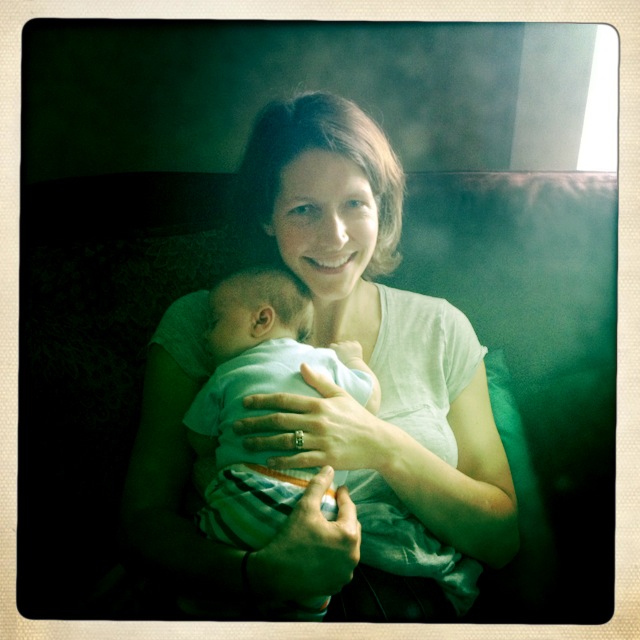
Molly with her newborn daughter
 My name is Molly Wales.  I am the director of The Birth Circle (a consumer birth group) in Athens, Ohio, and am a BirthWorks childbirth educator.  I’m here today to talk to you about why I believe that we aren’t doing enough in our country to honor birth as a peak life experience.  Perfect for Labor Day!

A short review of where I stand:  I believe that all people are deserving of equal treatment and opportunity.  I believe that a woman is born with the knowledge of how to give birth, and that if Mom can give birth with people who make her feel safe and secure, she’ll be able to follow her instincts and her body and her baby will know just how to work together.  I believe that a woman should have the right to give birth wherever she pleases, with whomever she pleases.  And I believe that birth is a hugely pivotal moment in life, and that the birth experience has a life-long impact on the mother, the child, and on their relationship.

These views do not represent the norm in our society.  Americans, in general, are taught not to trust birth.  Many, if not most, fear it.  And so we keep developing new ways to manipulate and change what already works. And as we force our control like this, the effects are disastrous.

According to a recent Amnesty International report, “The USA spends more than any other country on health care, and more on maternal health than any other type of hospital care. Despite this, women in the USA have a higher risk of dying of pregnancy-related complications than those in 49 other countries, including Kuwait, Bulgaria, and South Korea.”  What?!  WHAT?!  Why is this happening?  What has gone wrong with maternity care in our country?

Imagine a mom has her first visit with her care provider, be it an OB or midwife.  She’s told, “You are capable of having this baby without drugs.  And if that’s what you choose, we will support you in that.  If you or baby needs medical attention, we’ll be here.  But otherwise our job is to let your body do what it was created to do.”  If that were that norm, we wouldn’t be in such a crisis.  Rates of intervention would drop substantially, and our moms and babies would be healthier.

But that isn’t the kind of support that moms in our country generally receive, unless they choose a home birth assisted by a midwife.  Because OBs and hospital-based midwives work under protocol and deadlines that rush the process and place little to no value on the emotional importance of the experience.  Now I don’t mean to say that the OBs and midwives themselves don’t value the experience, necessarily, but rather that they are put under restraints that severely limit what they can do to honor birth as normal and natural, and to work with a mother on her body’s own timeline.

For example:  One of my students recalled going in for her very first visit with her OB, to talk about her exciting new pregnancy.  The doctor told her, “You’ll go into labor, you’ll come to the hospital, and we’ll get you an epidural.”  Notice the commands.  Notice the lack of choice.  Notice the complete failure to acknowledge this mom’s innate ability to give birth to her baby on her own.  In one short sentence, her power was robbed from her.

Or another student, who, while having a perfectly normal labor at the hospital, noticed that everyone in the room kept their eyes fixed on the monitor, telling her when a contraction was coming, telling her how hard it was…when all she wanted, needed, was some eye contact, someone to acknowledge that SHE was doing the work here, and that she was a healthy human mother, not just another illness hooked up to a machine.

And so most moms, at least in our country, never get that chance to realize their own power, that chance to feel accomplished as a mother, right from the very start, those sensations of labor that combine intense vulnerability with unimaginable atomic power.  When a woman gives birth naturally, she has to open up, physically and emotionally, to greet her baby.  It is an incredible start to the mother-child relationship, one of deep bonding, as mom and baby work together through one of life’s greatest challenges.  If we in the U.S., this world power, honored birth as the baby’s start to life-long mental health, and as the mother’s chance to untap her human potential, just think of how we could empower whole generations of women and children.  I remember saying to my little Lola, six short months ago, as I held her there on my living room floor in the darkness of the morning, “We did it, honey, we did it!”  So she was born into that joy, that total soul bearing, that pride.  What an advantage for us both. And I am no extraordinary woman.  Most healthy women are capable of having their babies without medical intervention.  Now certainly homebirth isn’t the right choice for every woman, but imagine what a difference that would make, in our country and in the overall state of our planet, if the majority of mother-baby pairs were trusted, unrushed, and just given a chance to let their bodies work in their own way.

But they aren’t.  Instead most pregnant women in the U.S. are highly uninformed.  They are treated as if their pregnancies are an illness. In labor, they are offered drugs when they should be offered emotional encouragement.  And yes, of course, a healthy baby and healthy mom are the most important things.  But they aren’t the ONLY important things.  There is a chance there for a peak life experience, for both mom and baby, a chance for that relationship to begin with a surge of strength, hormonally and emotionally, that fortifies them for years to come, if not for their whole lives.

In the end, it’s all about creating a peaceful world, isn’t it?  And where better to start, than our barest beginning.

December 13, 2012

The Importance of Prenatal Education

By Mali Schwartz
There are many prenatal programs that have been developed over the years to help women cope with childbirth.  The first childbirth education programs in America were conceived by men such as Dr. Fernand Lamaze, a French Obstetrician who introduced The Lamaze Method in 1951 through observing birthing techniques in Russia.  Dr. Grantly Dick-Read, an English obstetrician, introduced the idea of childbirth as a natural process whose book “Childbirth without Fear,” was published in 1933.  Dick Read’s work helped spawn the natural childbirth movement in the 1960s.

As childbirth became influenced by more advanced medical technological advances and the cesarean section rate rose in the 1980s, a number of grassroots organizations were formed to help educate the public about their birth choices.  BirthWorks International was created to educate women about the viability of having a VBAC – a vaginal birth after a cesarean.  BirthWorks International is one of the most comprehensive prenatal education programs available today.  It offers a holistic approach that focuses on the whole person. 

The prenatal education a woman receives through BWI not only helps her to understand proper nutrition and learn about the physiology of birth, it also includes topics that more standard prenatal education programs don’t even touch upon.  For instance one area that BirthWorks focuses on is healing past emotional pain in preparation of birth.  If a woman can heal emotional scars from her past – which may go all the way back to childhood, she has an opportunity to clear out negative energy fields that can hold her back from having an optimal birth experience. 

One example of how deeply held feelings manifest in the body is when a woman may experience bad headaches, feelings of numbness and depression.  These symptoms are related to holding anger and resentment, but she hides these toxic feelings behind a smiling, cheerful demeanor that she shows to the outside world.  In order to understand why she holds such anger, she must first explore and look for hints that lead to an understanding of what is happening.

Emotions allowed to flow freely in the body invariably change.  Using anger as an example, anger that is held typically remains anger.  But anger that is felt and allowed to move typically changes into other emotions, often fear, sadness, or pain. 

As an integral part of her training to become a BirthWorks International educator, a trainee must enroll in a three day workshop where she is led through a series of exercises to help release any deeply held emotional pain she might hold.  This will help her to act as a facilitator for her students to help them clear their own emotional fields. 

For instance exercises that ground and bring energy down through the legs and feet as well as working with the breath, the body, and the energy fields, is a way to clear out dead energy.  This allows for a basic sensation of feeling and a sense of grounding.  Simple exercises that help to open the energy centers on the bottom of the feet by standing and rolling one foot and then the other on a small rubber ball, stretching the toes and soles of the feet, squatting and straightening out the legs until there is a strong sense of the legs, helps a woman to feel more connected to her lower torso and feet.  This in turn gives her a greater sense of solidity and balance. 

Even though some women may not even be aware that their bodies are holding negative energy patterns, a perfect time to clear out these stuck patterns is before they actually give birth.  By clearing emotional blocks, an expectant woman will have much more energy to birth her baby into this world. 

Enrolling in a BirthWorks International childbirth education class give women the latest cutting edge childbirth information as well as helping them to delve into the essence of their being. 

November 27, 2012

Join our Board of Directors!

Would you like to be part of the BirthWorks International team? We have several open board positions, and we welcome your application! To apply for any of the following positions, send a letter of interest, two letters of reference, and a current resume or CV to info@birthworks.org.

Your letter of interest should detail your skills and background, explain why you think you are the one for the job, and state your personal goals for the position. Application materials should demonstrate a working knowledge of the responsibilities required, and a desire to serve BirthWorks. 

Letters of reference should include: One letter and reference attesting to the applicant’s integrity and character, and one letter and reference addressing the applicant's organization and communication skills from someone who has observed the applicant at work in their field.


Director of Marketing


Function and Responsibilities
  • Further the mission of BirthWorks through marketing opportunities
  • Oversee the Marketing Committee
  • Coordinate print, web and other marketing opportunities within the budget set by the Treasurer, with Board approval
  • Responsible for setting up speaking engagements for herself and various Board members at national conferences in order to promote BirthWorks mission
  • Responsible for setting up tables and/or print ads at national conferences. Will oversee staffing of tables with local Birth Works members.
  • Coordination of media packet and necessary follow up
  • Responsible for sending out press releases several times annually to promote various workshops, programs, conferences and position statements for BirthWorks
  • Submit articles or information for BirthWorks publications as needed
  • Participates in monthly Board of Directors Conference Calls
Skills/Experience Required
  • Certified childbirth educator or doula with BirthWorks preferred but not required
  • Good written and oral skills
  • Excellent computer skills with internet access
  • Ability to travel to annual Board of Directors meetings
  • Participate in monthly BirthWorks conference calls
  • Willingness to travel in local area for speaking engagements or as an exhibitor for BirthWorks.
  • Previous experience in marketing and public relations
Eligibility Requirements
  • Member of BirthWorks in good standing
  • Unlimited computer and internet access
  • Excellent interpersonal skills and ability to work well with a team


Director of Doula Program


Function and Responsibilities
  • Responsible for coordinating and overseeing the Doula Program for BirthWorks.
  • Oversee Doula Trainee Review Committee
  • Coordinate with Board of Directors in developing new ideas for program development
  • Make recommendations to the Board regarding changes in the Doula Program
  • Submit articles or information for BirthWorks publications as needed
  • Develop materials for the Doula Program
  • Revise and update existing materials as needed
  • Work with Workshop Coordinator to increase the number of BirthWorks Doula Workshops being held nationwide and overseas.
  • Be on the Trainee Review Committee as a reviewer of doula students
  • Participate in monthly Board of Directors Conference Call
Skills/Experience Required
  • No unresolved grievances
  • Be a Certified Doula with BirthWorks International
  • Good written and oral skills
  • Excellent computer skills
  • Ability to travel to bi-annual Board of Directors meetings
Eligibility Requirements
  • Member of BirthWorks in good standing
  • Be a good team member of the Leadership Team
  • Have unlimited access to computer and internet


Public Events Coordinator

Function and Responsibilities
  • Works on a national scale to organize public events, national conferences and local birthing seminars.
  • Furthers the mission of BirthWorks to provide opportunities to educate the public about safe birthing practices.
  • Provides strategies and locations for BirthWorks public events and conferences
  • Is part of a Leadership Team, working with the Board of Directors
  • Coordinates print, web and other marketing opportunities within the budget set by the Treasurer, with Board approval
  • Responsible for organizing the setting up of exhibit tables and/or print ads at national conferences and oversee staffing of tables with local BirthWorks members.
  • Is part of a Leadership Team, working with the BirthWorks Board of Directors
  • Opportunity includes meeting the changemakers in childbirth from the USA and overseas.
  • Participates in monthly Board of Director Conference Calls
  • Be willing to travel to BirthWorks public events and annual Board of Director meetings
Qualifications
  • Member of BirthWorks in good standing
  • No unresolved grievances
  • Good written and oral skills
  • Excellent computer skills with internet access
  • Ability to travel to annual Board of Directors meetings
  • Previous experience in organizing public events
  • Excellent interpersonal skills and good Leadership Team member


Director of Public Relations


Function and Responsibilities
  • To further the mission and vision of BirthWorks through public relations
  • Develop strategies and use all means of social media to publicize the name and message of BirthWorks i.e. press releases, Facebook, Twitter
  • Develop campaigns and slogans that help brand BirthWorks nationwide.
  • Works with the chair of the Ambassador Committee to determine ways in which Ambassadors can help spread the name of BirthWorks..
  • Develop materials needed to increase exposure of BirthWorks to other organizations and individuals working within the budget set by the Treasurer with Board approval
  • Set up and promote speaking engagements for Board Members at conferences.
  • Works with the Public Events Coordinator to set up exhibit tables and/or print ads at national conferences Oversee staffing of tables with local BirthWorks members.
  • Works with the Director of Marketing to seek ways in which to further public relations with other birthing organizations.
  • Update and promote media packet with necessary follow up making sure BirthWorks International is included in national and international publications (books, magazines)
  • Is a contributor to the BirthWorks newsletter and works closely with the editor.
  • Send press releases several times annually to promote various workshops, programs, conferences and position statements for Birth Works
  • Submit articles or information for BirthWorks publications as needed
  • Ability to travel to annual BWI Board of Director meetings
  • Participate in monthly Board of Directors Conference Calls
Skills/Experience Required
  • No unresolved grievances
  • Good written and oral skills
  • Excellent computer skills with internet access
  • Ability to travel to annual Board of Directors meetings
  • Willingness to travel in local area for speaking engagements as a representative of BirthWorks . Option to travel nationally, if desired.
  • Previous experience in marketing and public relations
Eligibility Requirements
  • Member of BirthWorks in good standing
  • Unlimited access to computer and internet
  • Excellent inter-personal skills and a good team member of the Leadership Team


Director of Publications


Function and Responsibility
  • Responsible for the organizing and publication of BirthWorks quarterly newsletter and BirthWorks E-News
  • Oversee the Publications committee, consisting of Editor of the Journal, Editor of the E-News and various writers
  • Responsible for securing advertising for each publication
  • Responsible for working with the responsible parties to oversee publications that Birth Works has in print.
  • Submit articles or information for BirthWorks publications as needed
  • Participate monthly Board of Director conference calls
Skills/ Experience Required
  • No unresolved grievances
  • Certified CCE or Doula with BirthWorks
  • Good written and oral skills
  • Excellent computer skills
  • Ability to travel to bi-annual Board of Directors meetings
  • Willingness to travel in local area for speaking engagements as a representative of BirthWorks . Option to travel nationally, if desired.
  • Prior experience in editing and publishing is desired
Eligibility Requirements
  • Member of BirthWorks in good standing
  • Unlimited computer and internet access
  • Excellent interpersonal skills and good team member

November 8, 2012

Book Review: New Mother by Allie Chee

Reviewed by Jane Beal, PhD, CD(DONA), CCE(BWI) & CLS

Allie Chee, author of New Mother: Using a Doula, Midwife, Postpartum Doula, Maid, Cook or Nanny to Support Healing, Bonding and Growth (Hestia Books & Media, 2012), is clearly an extraordinary person. She gave birth to her first baby at the age of 42 at home in the care of a midwife, but only after traveling to 50 different countries around the world, co-founding a leading financial industry publication, and owning her own cleaning business. So, as she says, “in the spirit of community” she offers what she has learned to her readers to help them “realize their dream of motherhood” (p. 20).

Allie Chee clearly values the opportunity for mothers to stay at home and raise their own children. She is in favor of families having servants to help make this happen well. As the daughter of a single mom who worked as a cleaning woman in Texas and as a woman who cleaned plenty herself—and then went on to own a cleaning business—she places a high value on service. Service is undervalued in our culture, but not in Chee’s family. In Chee’s view, service is particularly valuable to pregnant, birthing, and postpartum mothers. She has a good point.

Relying primarily on her personal experience, she talks in detail about the services she received from her OB-GYNs (only one of whom she kept as a back-up), two midwives (one of whom she fired), three doulas (all affiliated with her chosen midwife who were apparently in the role of apprentices), her two postpartum doulas (one of whom she detested), and a woman she hired who is, as she says, “a lot nanny, a little bit cook, and a tiny bit maid” (p. 125). She explains the qualifications she believes people in each of these roles should have and how she went about hiring them, giving the specific questions she asked in interviews and explaining the importance of contacting references. She emphasizes the importance of feeling that special “click” with people who are going to serve you.

Interwoven throughout her chapters is Chee’s interest in traditional Chinese medicine, Ayurvedic healing, and vegan meal preparation. She highlights the Chinese practice of the “sitting moon,” a 30-40 day period after birth in which the mother keeps to her bed with her baby as part of her healing process. Americans typically go on the “honeymoon” when they marry, and many have heard of the “baby moon” (a honeymoon-like getaway for the married couple during the second trimester of pregnancy), but incorporating the “sitting moon” into family life could bring truly great benefits. Chee particularly endorses the book, Sitting Moon: A Guide to Natural Rejuvenation after Pregnancy by Dr. Daoshing Ni and Jessica Chen.

As Chee accurately observes, far too many mothers strain themselves physically and emotionally in the postpartum period, primarily by returning to work before they are fully recovered from childbirth. This is better avoided—and can be, according to Chee, with proper support from others. In a day and age when family members can rarely take time off work to be with a new mother and baby, servants, in Chee’s view, are the key.

While New Mother is a useful book, it may not resonate with everyone. Allie Chee’s heart is clearly sympathetic to single moms, but her primary advice about how to achieve staying home with your baby after childbirth with servants to help you is not something most new parents can consider. She does not offer specific advice on how to afford this goal (though she does promise to do so in her next book, New Family). In Chee’s case, it appears that her own past financial success combined with her husband’s willingness to be the primary breadwinner during their only child’s infancy has made this affordable for her.

Chee is clearly in favor of natural birth, but her view of attachment parenting is unclear. She mentions babywearing (with a story of how her postpartum doula recommended a wrap that did not work for her) alongside car seats. She does not endorse safe co-sleeping and on-demand breastfeeding (though she does mention these as options). So families planning to practice attachment parenting may wish to read Dr. Sears’ The Attachment Parenting Book.

Finally, Chee does not cite or list other useful resources new mothers may want to consult, including books on natural childbirth like Pam England’s Birthing from Within, Barbara Harper’s Gentle Birth Choices, and Ina May’s Guide to Childbirth (though she does mention Ina May herself). Penny Simkin’s The Birth Partner, Klaus and Kennell’s The Doula Book and Rachel Gurevich’s The Doula Advantage will give mothers a much clearer idea of what most doulas actually do. Families might want to research doula organizations like ALACE/ TOLABOR, BirthWorks International, CAPPA, DONA International, and ICEA, too (Chee only mentions DONA in a footnote) or investigate the main differences in training provided to OB-GYNs, MDs, DOs (not mentioned), CNMs, CPMs, lay midwives, and traditional birth attendants. The book has very-little-to-no discussion of the importance of childbirth education, placental encapsulation (a traditional Chinese medicine technique!) or lactation counseling and consultation. The role of the father is relegated to a few brief mentions.

That said, Chee’s book is easy to read and relate to overall. It explains why family servants are needed and what their roles can be. In the end, it achieves its goal of presenting the role of service to the family by doulas, midwives, postpartum doulas, maids, cooks and nannies as a highly desirable and potentially wide-spread norm for Americans in the future.

October 19, 2012

How caregiver inquiry can shape prenatal care and birth experiences

By Anna Holder, CCE(BWI)


"What’s your cesarean section rate?"
"What is your episiotomy rate?"
"May I eat and drink during labor?"
"May I have a doula/ lots of family/ a photographer at my birth?"

Women and their partners are often encouraged to ask these and similar questions when selecting a care provider for their pregnancy and birth, the theory being that the provider who provides the answers the woman and her partner are looking for will provide safe and effective care. What about compassion, satisfaction in the birth process and empowerment of the woman and her partner? 

The answers are in the questions -- the questions that the provider asks, that is.

When a doctor or midwife goes beyond impersonal lifestyle surveys and “intake” questions, they are able to establish a relationship of trust with their client. They are also gaining a unique and in-depth look into the lives of their clients. Conversely, women and their families are given a strong voice and are invited to become true partners in their care and birth process rather than obedient “patients”. If a provider can not be bothered to ask in-depth questions or encourage the birthing family to research both scientific evidence and their own personal realities, why would that provider value the laboring woman or her support team in the throes of labor? Moreover, if the woman and her care provider have not explored these issues in the relative calm of the prenatal period, how will the relationship between them play out in the excitement of birth?

Some questions prospective caregivers should be asking women are:

  1. Tell me about your previous births or experiences with birth. What did you like or not like about them?
 This question encourages reflection on the part of the woman and her partner and identifies possible fears, expectations and goals. When started early, this dialogue can build a foundation of trust between provider and client as well as between the woman and her partner. It also helps to create a framework of what client and provider are working towards in regards to maternal and fetal health and birth process.

 I once had a client who wanted a vaginal birth after cesarean (VBAC). Her primary cesarean was for a breech baby where no option for External Cephalic Version (ECV) was offered. She was separated from her child for 3 hours and suffered Postpartum Depression. Upon learning of her second pregnancy, she chose a different provider and place of birth. When it was found that her second child was also breech, she was encouraged to try herbs, acupuncture and positional techniques before being offered an ECV. When the version was unsuccessful, she chose to go into labor on her own before a repeat cesarean was performed. She was never separated from her child and reported a great deal of healing from her first experience. As she had explained her hopes and fears to her doctor, she had her wishes honored and had a respectful birth. 

  1. Why do you want to have or avoid particular tests or procedures? Have you read about the risks and benefits?
Asking this question sets the stage for informed consent or refusal and promotes research and accountability for the birthing family. When families are encouraged to participate in their care and hold some level of responsibility for it, they are more likely to make well thought out choices in addition to feeling more satisfaction with their experience.

The safety of VBAC is well documented. However, many obstetricians dissuade women from pursuing this option in spite of the most current recommendation by the American College of Obstetrics and Gynecology (ACOG) endorsing trial of labor after cesarean(s) (TOLAC). Even a cursory exploration of the current research would provide those wishing to have a VBAC with ample support of their goal.

  1. What are you eating? How can I help you incorporate healthy changes?
Simply telling a woman not to smoke, drink alcohol and avoid sushi is not the same as ensuring proper protein intake and identifying any potential deficits in diet. By dedicating ample attention to nutrition, mother and baby can achieve optimal health while avoiding complications from morning sickness to pre-eclampsia.

I know of a woman who was planning a home birth with a midwife. At her home visit it was found that her blood pressure had elevated after she had been following a strict diet and herbal regime. After asking more questions and a tour of her cupboards, it was found that a powdered tea beverage the woman was drinking daily was delivering a whopping 27g of sugar.  The midwife counseled her that this was not helping her pressures and could make her already presumably large baby bigger. After removing the beverage, the woman went on to have a healthy 8lb 15oz baby at home 3 weeks later. (Okay, okay, the woman was me, but I still haven’t had any more chai).

Just as a provider’s cesarean rate doesn’t always belie their philosophy about birth, the number of births a woman has had doesn’t illustrate the unique circumstances present in her current pregnancy. The earlier providers establish a deep dialogue, the more compassion and satisfaction are united with safety and efficacy to provide better outcomes for moms, babies and providers.